
Key factors to consider when selecting a trustworthy investigation or recovery service to avoid further scams.
How Crypto Scams Work: A Beginner’s Guide
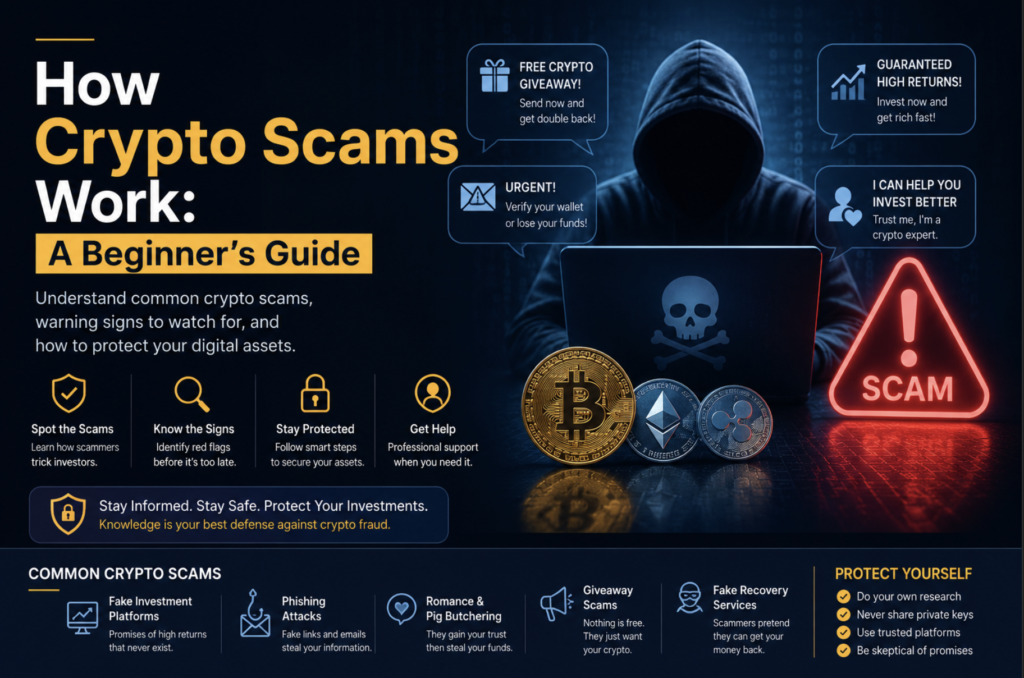
Cryptocurrency has created exciting opportunities for investors worldwide, but it has also become a major target for scammers. Every year, thousands of people lose millions of dollars to fake investment platforms, phishing attacks, romance scams, and fraudulent recovery services.
Understanding how crypto scams work is the first step toward protecting yourself and your digital assets. This beginner’s guide explains the most common crypto scams, warning signs to watch for, and practical tips to stay safe online
What Is a Crypto Scam?
A crypto scam is any fraudulent scheme designed to steal cryptocurrency, personal information, or access to digital wallets. Scammers often pretend to be investment experts, blockchain companies, customer support representatives, or even recovery agents.
Because cryptocurrency transactions are decentralized and often irreversible, victims usually have little chance of recovering funds without professional blockchain investigation services.
Common Types of Crypto Scams
1. Fake Investment Platforms
Fraudsters create professional-looking websites promising guaranteed profits or high daily returns. Victims deposit cryptocurrency and initially see fake gains displayed on their accounts. When they attempt to withdraw funds, the scammers disappear or demand additional fees.
2. Phishing Scams
Scammers send fake emails, text messages, or social media links pretending to be legitimate crypto exchanges or wallet providers. Their goal is to trick users into revealing passwords, private keys, or recovery phrases.
3. Romance and Pig Butchering Scams
In these scams, fraudsters build emotional relationships with victims through dating apps or social media. Once trust is established, they convince victims to invest in fake cryptocurrency platforms.
4. Giveaway Scams
Fake celebrity or company accounts promise to double any cryptocurrency sent to a wallet address. Once funds are transferred, the scammer vanishes.
5. Fake Crypto Recovery Services
Some scammers target victims twice by pretending they can recover lost cryptocurrency. They demand upfront fees and disappear without providing any service.
Warning Signs of a Crypto Scam
Recognizing red flags can help you avoid becoming a victim. Be cautious if you notice:
- Guaranteed investment returns
- Pressure to act quickly
- Requests for private keys or recovery phrases
- Unlicensed investment companies
- Anonymous team members
- Unrealistic profits
- Poor website security
- Fake testimonials or reviews
If something sounds too good to be true, it usually is.
How Scammers Manipulate Victims
Crypto scammers often use psychological tactics such as:
- Fear of missing out (FOMO)
- Urgency and pressure
- Emotional manipulation
- Fake success stories
- Technical jargon to confuse beginners
Their goal is to create trust while pushing victims into making fast financial decisions.
How To Protect Yourself
Here are some important safety tips:
Use Trusted Exchanges
Only use reputable cryptocurrency exchanges and wallets with strong security reputations.
Enable Two-Factor Authentication
Protect your accounts with 2FA to reduce the risk of unauthorized access.
Verify Website URLs
Always double-check website addresses before entering login credentials.
Never Share Private Keys
Legitimate companies will never ask for your recovery phrase or private wallet keys.
Research Before Investing
Read reviews, verify company registrations, and investigate the platform thoroughly.
Avoid Unrealistic Promises
High guaranteed returns are one of the biggest scam warning signs.
What To Do If You Have Been Scammed
If you believe you’ve been targeted by a crypto scam:
- Stop sending money immediately
- Save transaction records and screenshots
- Report the scam to relevant authorities
- Contact your exchange or wallet provider
- Seek professional blockchain investigation assistance
Fast action improves the chances of tracing stolen funds and identifying scam networks.
Can Stolen Cryptocurrency Be Recovered?
In some cases, yes. Blockchain transactions are traceable, and experienced investigators may be able to follow the movement of stolen funds across wallets and exchanges.
Recovery success depends on several factors, including:
- How quickly the case is reported
- The type of scam involved
- Whether funds were moved through exchanges
- Available transaction evidence
Professional crypto investigation services use blockchain analysis tools to trace digital assets and gather intelligence.
Final Thoughts
Crypto scams continue to evolve as digital currencies become more popular. Education, caution, and proper security practices are essential for protecting your investments.
Understanding how crypto scams work can help investors avoid financial losses and protect their digital assets. As cryptocurrency scams continue to evolve, staying informed about online fraud tactics, fake investment platforms, phishing attacks, and recovery scams is essential for every crypto investor.
By understanding common scam tactics and staying alert online, you can significantly reduce your risk and make safer decisions in the cryptocurrency space.
If you suspect fraudulent activity or need assistance tracing stolen cryptocurrency, professional blockchain investigation services may help provide guidance and support.
Trusted Resources for Crypto Scam Victims
To learn more about cryptocurrency fraud prevention and reporting scams, visit these trusted resources:
- Federal Trade Commission (FTC):
https://consumer.ftc.gov/scams - Chainalysis Crypto Crime Report:
https://www.chainalysis.com - FBI Internet Crime Complaint Center (IC3):
https://www.ic3.gov - Binance Academy Security Guide:
https://academy.binance.com
If you already have related posts/pages, link them like this:
- Learn more about our Crypto Asset Recovery Services
- Read our guide on Can Stolen Cryptocurrency Be Recovered
- Explore our latest Blockchain Investigation Case Studies
- Contact our team for a Free Consultation
Frequently Asked Questions
What are the most common crypto scams?
The most common crypto scams include phishing attacks, fake investment platforms, giveaway scams, romance scams, and fake crypto recovery services.
Can stolen cryptocurrency be recovered?
In some cases, stolen cryptocurrency can be traced using blockchain analysis tools and professional investigation services.
How can I avoid cryptocurrency scams?
You can avoid cryptocurrency scams by using trusted exchanges, enabling two-factor authentication, researching investment platforms, and never sharing private wallet keys.
Are crypto recovery services legitimate?
Some crypto recovery services are legitimate, but many are scams. Always research the company carefully before paying any fees.